
Why Growing Teams Move from Per-User QuickBooks Add-Ons to Unlimited-User Cloud ERP
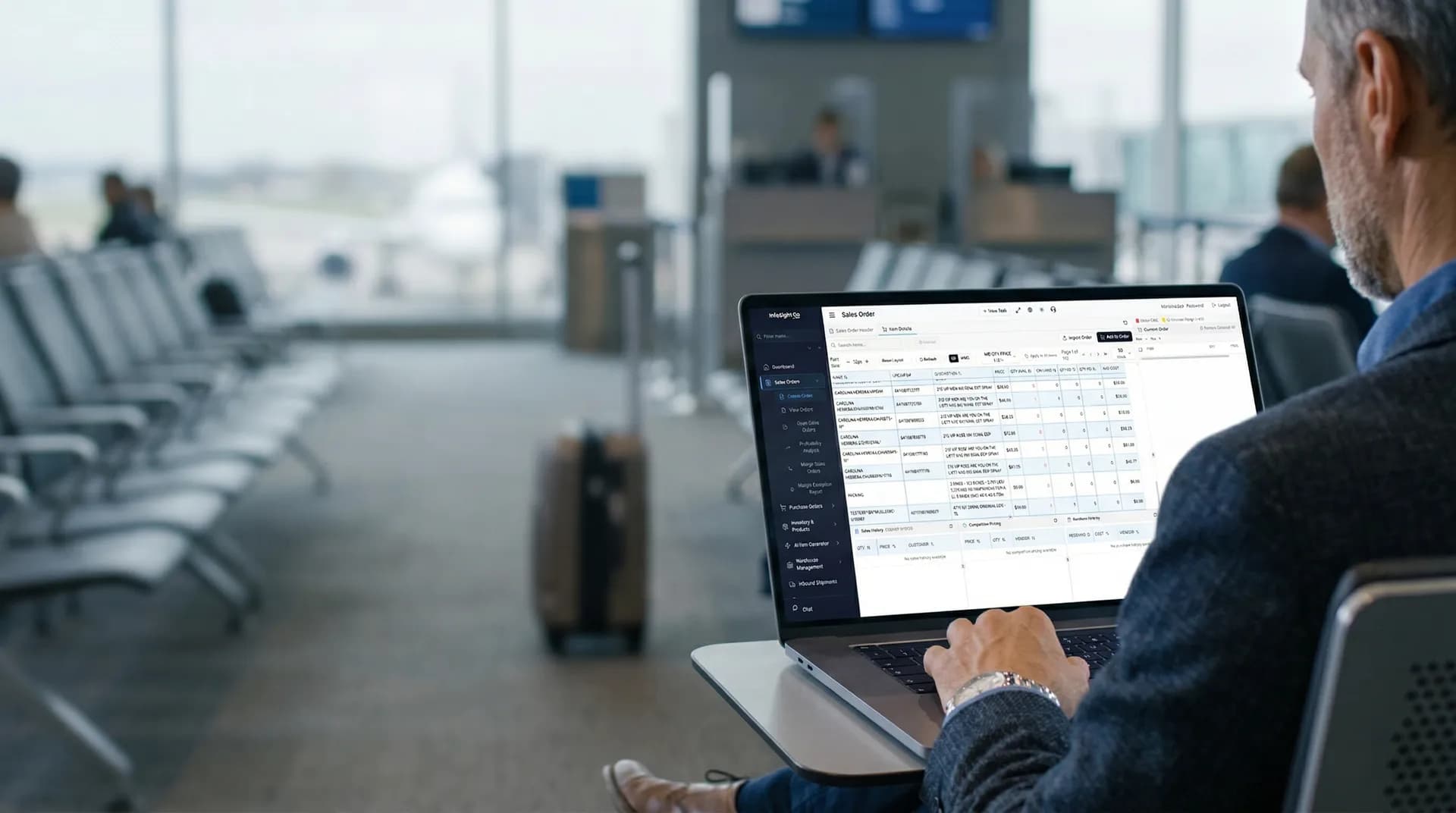
Per-user software pricing looks manageable when a business is small. It starts to feel very different when more warehouse staff, managers, buyers, customer service reps, and executives all need access to the same operational picture.
At that point, the software pricing model itself becomes part of the operational problem.
That is one reason growing teams often move away from per-user QuickBooks add-ons and toward InfoSight Go cloud ERP, where broader team access is easier to support.
Why per-user pricing becomes a bottleneck
Per-user pricing does not just increase cost. It changes behavior.
When every additional user creates another software decision, companies often start limiting access instead of improving workflows. That can lead to:
- fewer people seeing live information
- more shared logins or informal workarounds
- slower communication between teams
- more dependence on a small number of power users
That may reduce software spend in the short term, but it usually increases operational drag.
More users usually means healthier operations
In a growing business, the right people need access to the right information at the right time.
Warehouse teams need execution visibility. Managers need status visibility. Sales and customer service need confidence in availability and fulfillment status. Leadership needs reporting.
When access is artificially restricted, the result is usually more manual coordination and slower decisions.
That is why a cloud ERP model with broader user access is often not just a pricing preference. It is an operational advantage.
Growth should not be punished by your licensing model
Healthy growth often means:
- more locations
- more warehouse activity
- more order volume
- more team members involved in operations
If every new hire increases software friction, the system starts working against the business.
By contrast, a platform designed around broader access lets companies scale operations without turning each staffing change into a licensing project.
Why cloud ERP changes the conversation
Cloud ERP does more than change where the software is hosted. It changes how teams participate in the workflow.
For QuickBooks users, that can mean:
- easier access across departments
- better visibility outside a single machine or location
- fewer barriers for expanding operational usage
- less infrastructure overhead than a traditional local setup
That does not make cloud the right answer for every company, but it is a strong fit for teams that want more access and less friction.
If you are still weighing deployment options, it helps to compare cloud ERP and on-premise ERP for QuickBooks users before choosing a direction.
The hidden cost of limited access
Companies sometimes compare only license cost and miss the operational cost of restricted access.
Those hidden costs often show up as:
- delays waiting for someone else to check the system
- more side communication to confirm order status
- more manual exports and screenshots
- weaker accountability because too few users can interact with the workflow directly
This is especially noticeable when the business is trying to improve order management for QuickBooks or warehouse execution.
When unlimited-user access matters most
An unlimited-user model usually becomes more attractive when:
- the warehouse team is growing
- multiple departments need live operational visibility
- the company is adding locations
- leadership wants more people participating in the system directly
It also matters when the business wants to reduce the habit of treating operational software as something only a few people are allowed to touch.
It is not just about pricing
The strongest case for unlimited-user cloud ERP is not "licenses are expensive." The stronger case is that more complete access can produce better process execution, better communication, and less operational bottlenecking.
That is what makes the model strategically useful, not just financially attractive.
Final thought
If your team is growing, per-user pricing can quietly become a process tax. A broader-access cloud ERP model removes that constraint and gives the business more room to scale operations cleanly.
If that matches the direction your business is heading, start by reviewing InfoSight Go cloud ERP, compare your pricing options, and then request a demo to see how the workflow would look for your team.